Some leaks announce themselves with a drip or a puddle. Others hide: a pinhole in a pipe inside a wall, a supply line under a slab, or a break in the water service line out in the yard. The first clue is often a water bill that jumps for no reason, a meter that keeps spinning with every faucet off, a warm spot on a floor, a stain on a ceiling or the faint sound of running water at night.
Littleton Plumber Help is an independent referral service, not a plumbing company. A request through this site goes to an independent plumbing contractor who serves Littleton and does leak detection and repair. The plumber locates the leak, explains the repair options and gives you a price before any walls or floors are opened. The referral is free. Callbacks and on-site availability vary.
Signs of a Hidden Leak
- A higher water bill without a change in use.
- The meter moving when nothing in the house is running.
- Stains, bubbling paint or soft drywall on walls and ceilings.
- Warm spots on a floor, which can point to a hot water line leaking under a slab.
- Musty smells, mold or damp carpet.
- A wet or unusually green strip in the yard along the path of the water line.
A simple check: turn off every fixture and appliance that uses water, then watch the meter. If it still moves, water is going somewhere.
Who Owns the Line
Denver Water says the homeowner owns the water service line from the tap at the main to the house, including the curb stop (the stop and waste valve outside), and owns the meter. Denver Water fixes meters that fail from normal wear, but it is not responsible for water damage from a customer's line or plumbing. A leak in the street or a water main break is a different matter; the City of Littleton lists Denver Water's daytime and after-hours lines for those.
How Leaks Are Found and Fixed
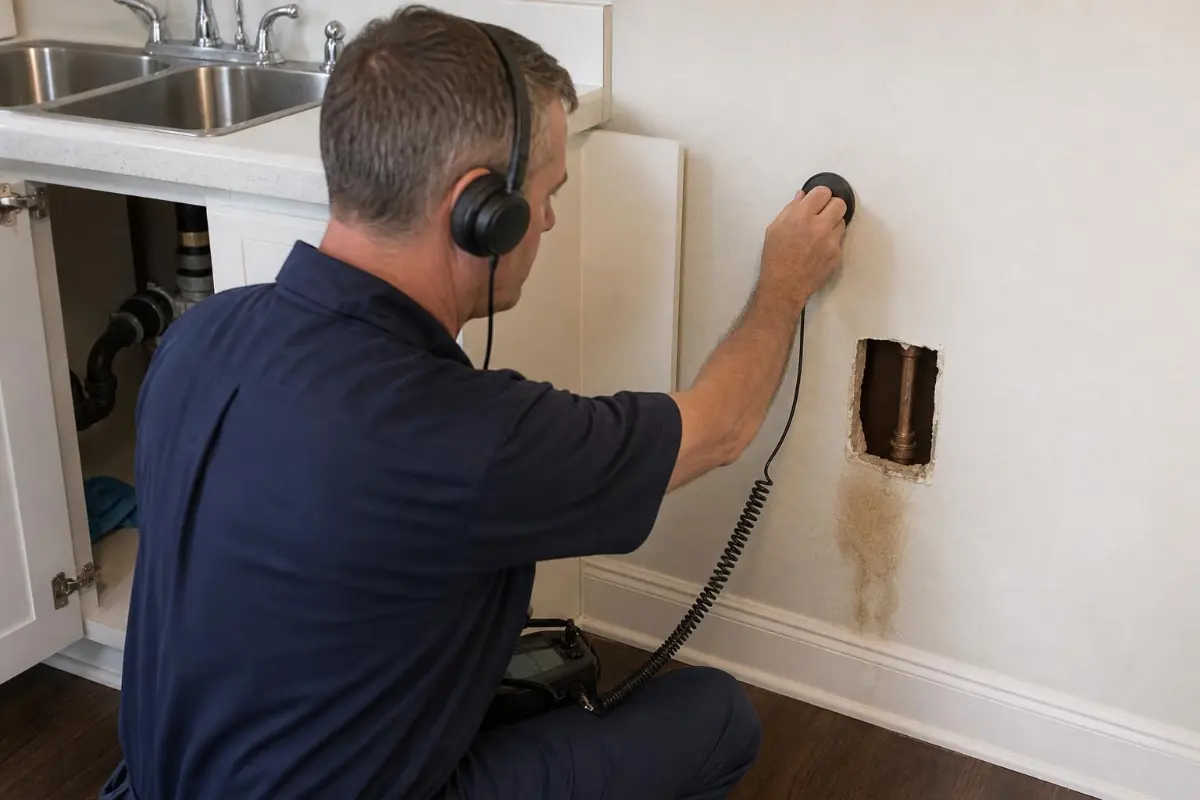
Plumbers find hidden leaks by isolating sections of the system, pressure testing lines, listening for the sound of escaping water, and using moisture meters or thermal imaging, so the opening in the wall or floor can be as small as possible. Ask what method they will use and what the detection fee includes.
Repair options depend on where the leak is:
- Exposed pipe or fixture: repaired or replaced directly.
- Inside a wall or ceiling: a section opened, the pipe repaired, and the wall patched by the plumber or a separate drywall contractor.
- Under a slab: a direct repair through the slab, or rerouting the line through walls or ceilings to abandon the leaking section.
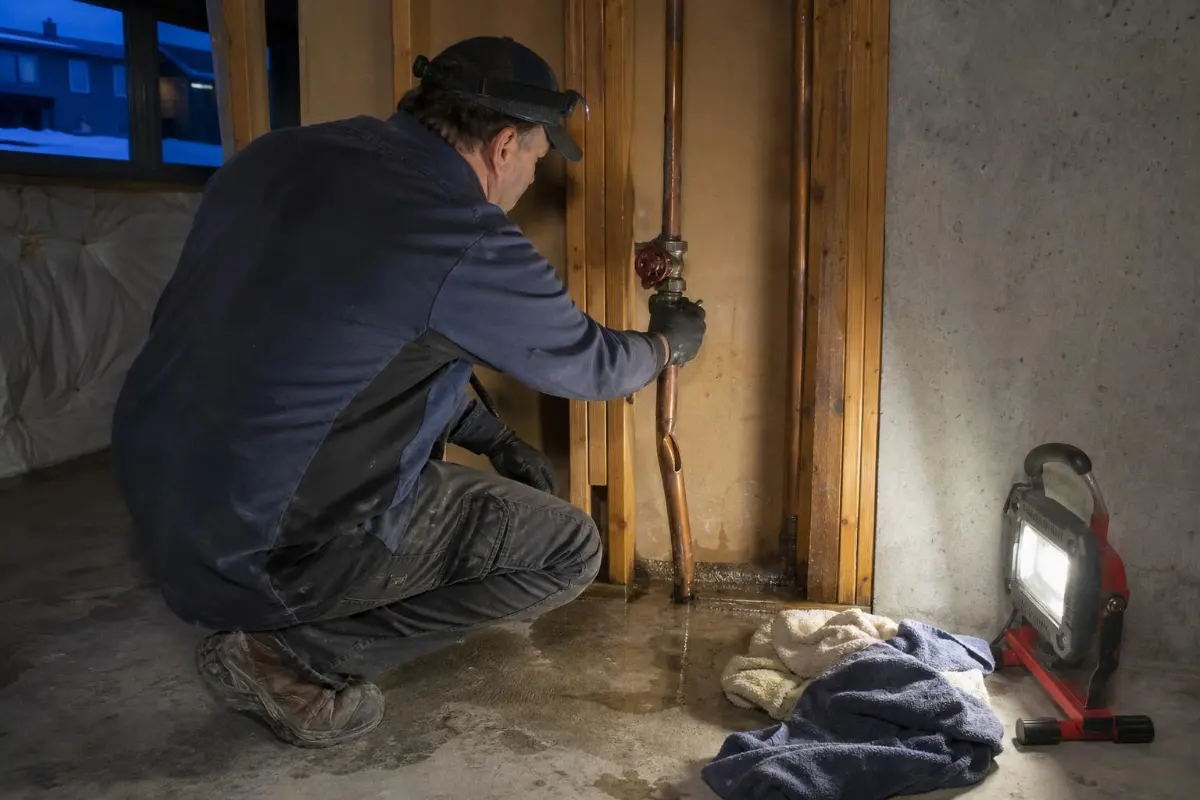
- Water service line: a spot repair or replacement of the line from the curb stop to the house, with digging rules below.
Older homes deserve a broader look. The city's data book shows about 53 percent of Littleton homes built before 1980, by our math. Denver Water says lead solder on copper was "common before 1987" and that homes built before 1951 are more likely to have lead service lines. The home inspectors' association InterNACHI says polybutylene supply pipe, made from 1978 to mid-1995, can flake and crack. If leaks keep showing up in the same kind of pipe, ask whether a section or whole-house repipe makes more sense than chasing pinholes.
What Leak Detection and Repair Cost
The plumber sets the price. These are guides:
- Littleton faucet, fixture and pipe repair (Angi; the page does not date its data): average $354, most jobs $207 to $513, high $900 (Angi, Littleton).
- Denver-area: diagnostic fee $100 to $250; small repairs $120 to $300; burst pipe repair $1,000 to $4,000 (Angi, Denver; undated). Denver pipe replacement averages about $1,431, most jobs $544 to $2,428 (Angi, Denver pipes, updated August 4, 2026).
- National leak detection and slab leaks (HomeAdvisor, labeled 2025): detection averages $280, most pay $150 to $400; slab leak repair averages $2,280, most jobs $630 to $4,400; rerouting a line $600 to $4,000; a pinhole leak $150 to $800; a single burst pipe $200 to $3,000; water damage cleanup $1,000 to $6,000 (HomeAdvisor).
What moves the price: how hard the leak is to find and reach, slab versus wall versus yard, the pipe material, how much drywall, flooring or concrete has to be opened and restored, and whether a reroute or repipe is the better fix.
Permits, Digging and Backflow
The City of Littleton's 2024 ordinance, in the first-reading text we read, lists stopping leaks and repairing leaks in pipes, valves or fixtures as work that needs no permit, but says replacing a concealed pipe is new work that needs one. Outside city limits, Jefferson County and Douglas County issue plumbing permits. If the water service line has to be dug up, Colorado 811 says to contact 811 and wait three business days for public utility marks. And if your water provider requires a backflow test on your system, Denver Water says it must be done by a certified tester.